


Sometimes I think about the messes I’ve made throughout my life: friendships that turned into heartbreaks, drunken stumbles into next mornings, poor choices, bad breakups, missed chances. The list is messy—and sometimes a little bit beautiful. But I’ve learned to appreciate my own weathering, too. Both the scratches and the scars.
When I look at the LGBTQIA+ movement, past and present, I don’t see broken stories. I see kintsugi: the Japanese art of filling cracks with gold. Our cracks become design, our flaws, value. Stories never finished, only ever pieced together to make the whole. Bonded by love.
And honestly? That’s the queerest thing I know. There’s wabi-sabi in every scar and stumble.
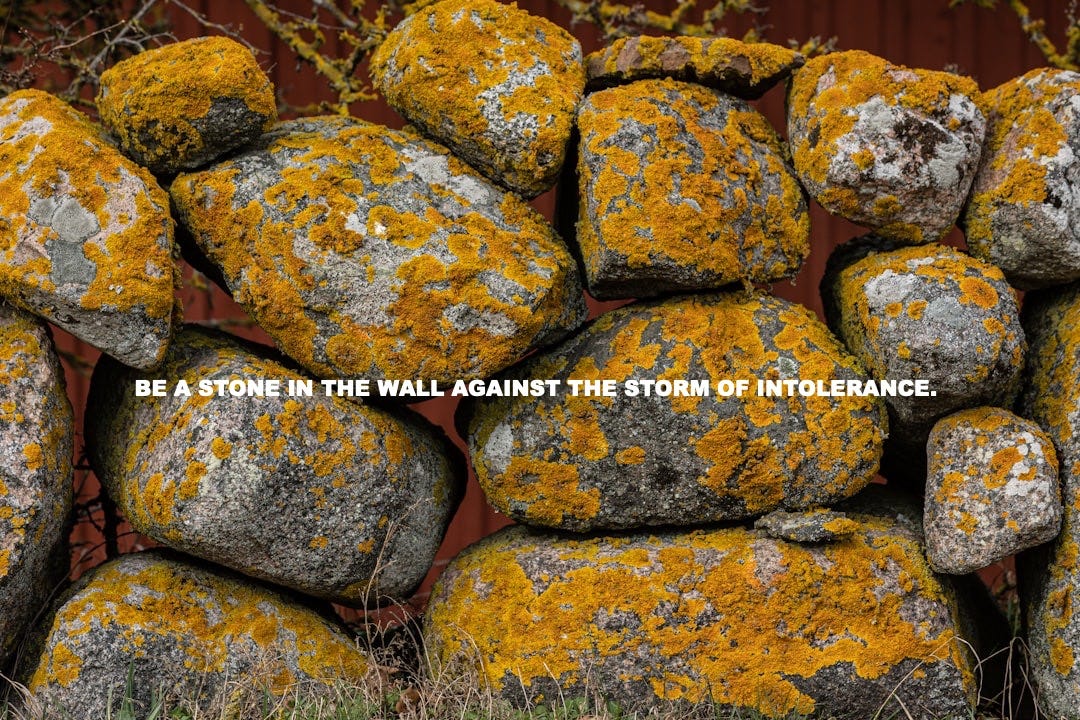
Wabi-sabi teaches us nothing is perfect, nothing is permanent, and nothing is ever finished—yet there’s aching beauty in that imperfection. We don’t fix what’s broken to hide it; we honor the cracks. We sit with them. We wear the weathering. We let it be.
Our lives are a patchwork: heartbreaks, highs, bad jobs, deep loves, disco nights, courthouse steps.
I still remember my first love. The heartbreak I experienced and the heartbreak I caused.
My first nightclub dancing to Gloria by Laura Branigan and feeling seen as who I was, belonging.
My first job I felt accepted for being me.
My first apartment, the place I lived free.
My first Pride event—air thick with acceptance and love. Shoulders relaxed, head held high. Healing the soul.
All moments I hold to this day. They shaped me.
Years of lived life, a patchwork of love and friendships, have sewn me together with growth and gold.
Think of Harvey Milk, who wasn’t perfect, barely safe, but stubbornly visible. He once said “Hope will never be silent.” He’s right; can’t you hear his voice reaching out from ‘70s San Francisco, through Stonewall, through Orlando, through every small-town Pride?
I can.
We can never forget those words, those fights, those lessons that remind us: our community—all of us. Every. Single. Letter. Is power.
The Queer movement is built by those who dared to disrupt: from William Dorsey Swann, the “queen of drag” who led an early gay resistance group to Marsha and Sylvia shouting back, refusing to hide at Stonewall; AIDS quilts, sewn by mourning hands; trans kids daring to be seen; and all of us marching proudly through streets, holding hands, holding space — even as lawmakers turn our lives into talking points. We’re gloriously unfinished. Beautifully real. And it’s all ours. Every crack, every bruise, every broken bone and broken heart, is bonding us together. We embrace, we hold each other up, and through healing we become stronger. Golden, and more beautiful than before.
Audre Lorde, who lived through cancer, racism, and all the hard edges of the world, reminded us that caring for yourself is political work. Her survival was sacred; the cracks bespoke. She didn’t wait for the world to soften, she carved out her own seat, wrote herself into history. “Caring for myself is not self-indulgence, it is self-preservation, and that is an act of political warfare.”
Personal necessity and collective resistance.
Marsha P. Johnson didn’t know the ending; she just knew the world was wrong the way it was. Sylvia Rivera pounded podiums in high heels and hope, demanding space for the T before the rest of us caught up. They were told to wait. Good thing they didn’t. Their cracks? Pure gold.
Wabi-sabi doesn’t erase the years; it celebrates them.
The trans teen in Oklahoma, terrified but showing up anyway, wabi-sabi.
The bisexual elder coming out at 70, wabi-sabi.
The queer parent fumbling through paperwork because the world still doesn’t see two dads as normal, wabi-sabi.
The drag performer reading to kids in libraries while protesters scream outside, pure, radiant wabi-sabi.
And as I hear, read, and watch those stories, sometimes I see myself (at eighteen, and now at sixty-one), afraid but showing up, if only by degree and necessity. Maybe you do, too.
This movement is messy.
We argue, we love too loudly or not at all, we botch our history, we get dragged online.
And still: we show up.
I’ve forgotten history sometimes, too. I’ve flubbed the right pronouns, gotten loud online, shrunk when I meant to stand tall.
And still: I show up to be reminded and to be a stone in the wall against the storm of intolerance.
Even when they try to roll back our rights, we move forward. I hold my breath through every Supreme Court headline. Call my friends. Text my queer family. We remind each other, louder and softer, “We’re not going anywhere.”
When politicians lie, we tell the truth about ourselves. When they pass bans and block books, we crank up the volume.
We are not mistakes. Not phases. Not broken. We’re golden.
As a queer person, I see the gold in these cracks every day. This isn’t about achieving some flawless utopia where everyone holds hands and sings show-tunes under a rainbow. (Although, honestly, I would totally love that. Greatest Showman, This is me! all day everyday.) It’s about embracing the work as ongoing. Liberation is a practice, not a destination. Justice is a garden, not a monument.
Bayard Rustin, Black, gay, brilliant, pushed aside for it, never hiding who he was, never quit organizing for Martin Luther King Jr., never quit loving. Queer folks make art from chaos, family from strangers, ballroom out of basements, laughter out of blackouts.
“If you can’t love yourself,” RuPaul says, “how the hell you gonna love somebody else?” It’s real. It’s sass. But it’s the heart of wabi-sabi: you show up, scars and all.
Every protest, every public kiss, every off-key song at a vigil, every refusal to shrink, that’s gold in the cracks. That’s where the light gets in.
That’s us. That’s me. And, maybe, that’s you, too.
I’m not after a perfect world, just one roomy enough for queer joy, grief, awkward beginnings, messy middles, and painful ends. For all our broken pieces to glitter in the sun.
We are the cracked bowl. We are the gold. Somehow still standing. Still queer. Still fighting.
That’s Wabi-Sabi, dude. And that’s queer as hell!
-David
You nailed it with the Wabi-Sabi. Kinda. I didn't run into the word "lesbian" in your piece. Using the word queer to reflect all of us under the big Rainbow Umbrella works fine in many ways, but often it does not. Leaving out the "L" word disappears lesbians incrementally. The mention of Audre Lorde was great, but I believe she was the lone lesbian in the list of individuals you offered up. Thank you for listening.
Love this thanks for sharing